The Hidden Reason You Wake Up Tired
25.01.2026
7 mins
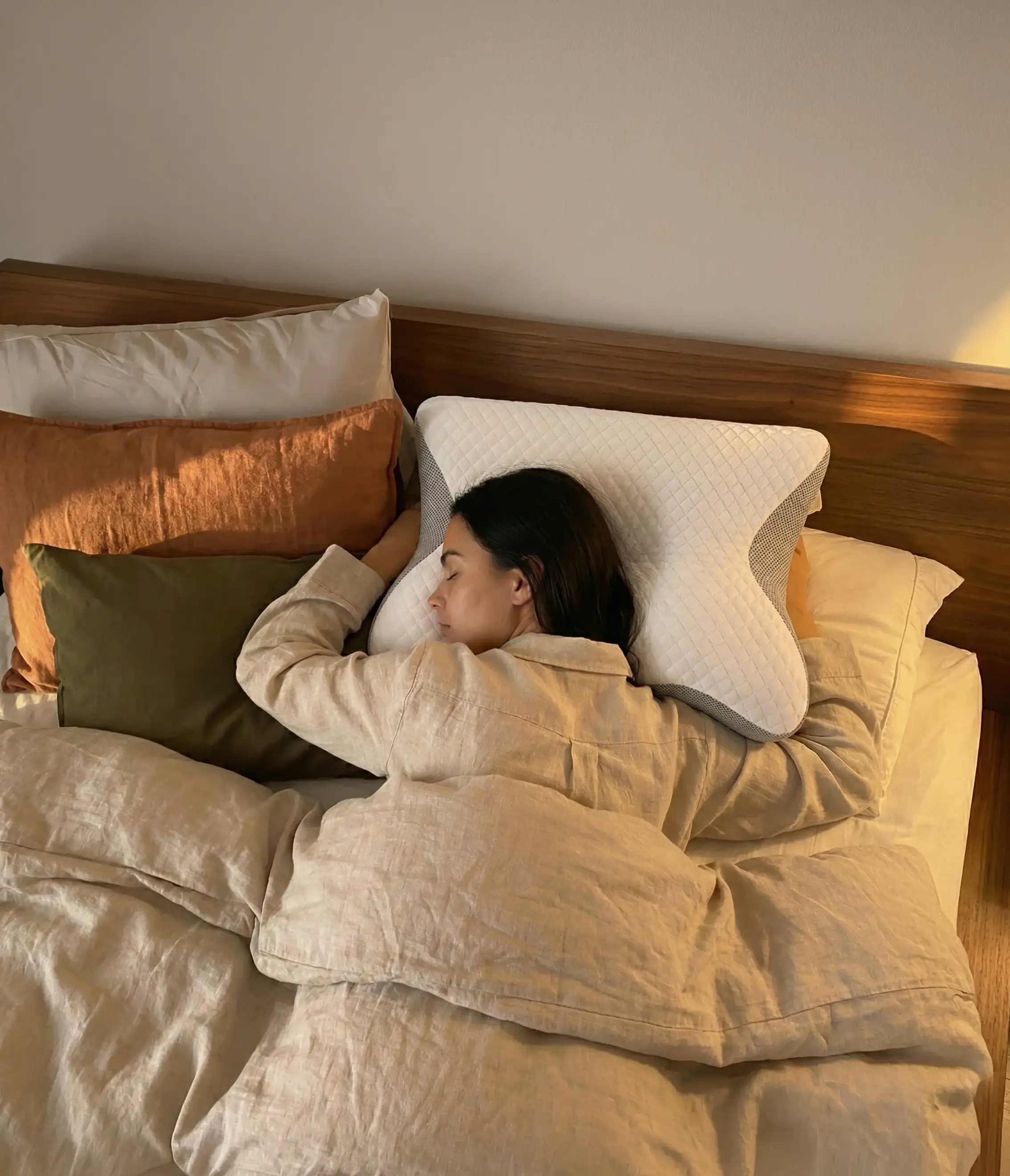
We spend nearly a third of our lives sleeping, yet most of us give very little thought to the one object supporting us for six to eight hours every night: our pillow.
When sleep feels restless or mornings begin with stiffness, we often blame stress, long workdays, or poor posture. Rarely do we question whether the problem begins the moment our head touches the pillow.
The truth is, proper neck support plays a significant role in sleep quality. And not all pillows are designed to provide it.
Why Traditional Pillows Fall Short
Standard pillows are typically uniform in shape and density. They may feel comfortable at first, but comfort and support are not the same thing. A pillow that is too flat allows the head to tilt backward or forward, placing strain on the cervical spine. One that is too high can push the neck into an unnatural angle, creating tension across the shoulders and upper back.
Over time, even minor misalignment can contribute to morning stiffness, shoulder tightness, and interrupted sleep. Because these issues develop gradually, many people assume discomfort is simply part of getting older or living a busy lifestyle.
But alignment during sleep is just as important as posture during the day.
Understanding Ergonomic Design
An ergonomic neck pillow is specifically shaped to support the natural curve of the cervical spine. Instead of a uniform surface, it features a contoured design that cradles the head while maintaining proper spinal alignment.
The goal is not simply softness, but balance. The head remains supported without being forced forward or allowed to collapse backward. The neck’s natural curve is maintained, and pressure is distributed more evenly.
For side sleepers, the higher contour helps fill the space between the shoulder and neck, preventing lateral bending. For back sleepers, a lower contour supports the base of the skull while keeping the spine neutral.
This alignment can help reduce unnecessary muscle strain during the night, allowing the body to relax more fully.
The Role of Memory Foam
Material matters as much as shape. Memory foam is often used in ergonomic pillows because of its ability to respond to body weight and temperature. Unlike traditional filling that compresses and stays flattened, memory foam adapts to individual contours while maintaining structural support.
This responsiveness helps minimise pressure points and reduces the need to constantly adjust the pillow during the night. It also tends to retain its shape longer than standard fiber-filled pillows, providing more consistent support over time.
Breathable covers and ventilated designs further enhance comfort, helping regulate temperature throughout the night.
Signs Your Pillow May Be the Problem
Many people don’t realise their pillow is contributing to discomfort. Waking up with a stiff neck, frequently placing an arm under the pillow for extra height, or constantly fluffing and readjusting throughout the night can all signal inadequate support.
Even subtle tension in the shoulders or mild discomfort upon waking may be linked to poor alignment during sleep. While an ergonomic pillow is not a medical device, improving support can be a practical step toward a more restorative sleep experience.
Sleep, Posture, and Modern Life
Modern habits place significant strain on the neck and upper spine. Hours spent at desks, looking down at phones, or traveling frequently can all contribute to tension in the cervical region. When nighttime support is inadequate, the body never fully resets.
An ergonomic pillow offers an opportunity for better rest. By maintaining neutral alignment while you sleep, it supports the spine during the one period of the day dedicated to restoration.
Rethinking Comfort
Comfort is often associated with softness, but true comfort is about support. A pillow that feels plush yet fails to maintain alignment may provide short-term coziness but long-term strain.
Ergonomic design challenges the idea that one shape fits everyone. Instead, it recognises that the neck has a natural curve that deserves structured support, especially during the hours when the body is meant to rest and recharge.
Better sleep is rarely about a single change. But sometimes, improving what supports you every night can quietly transform how you feel every morning.
Because rest is not only about duration. It is about alignment, balance, and the quality of support beneath you.
We spend nearly a third of our lives sleeping, yet most of us give very little thought to the one object supporting us for six to eight hours every night: our pillow.
When sleep feels restless or mornings begin with stiffness, we often blame stress, long workdays, or poor posture. Rarely do we question whether the problem begins the moment our head touches the pillow.
The truth is, proper neck support plays a significant role in sleep quality. And not all pillows are designed to provide it.
Why Traditional Pillows Fall Short
Standard pillows are typically uniform in shape and density. They may feel comfortable at first, but comfort and support are not the same thing. A pillow that is too flat allows the head to tilt backward or forward, placing strain on the cervical spine. One that is too high can push the neck into an unnatural angle, creating tension across the shoulders and upper back.
Over time, even minor misalignment can contribute to morning stiffness, shoulder tightness, and interrupted sleep. Because these issues develop gradually, many people assume discomfort is simply part of getting older or living a busy lifestyle.
But alignment during sleep is just as important as posture during the day.
Understanding Ergonomic Design
An ergonomic neck pillow is specifically shaped to support the natural curve of the cervical spine. Instead of a uniform surface, it features a contoured design that cradles the head while maintaining proper spinal alignment.
The goal is not simply softness, but balance. The head remains supported without being forced forward or allowed to collapse backward. The neck’s natural curve is maintained, and pressure is distributed more evenly.
For side sleepers, the higher contour helps fill the space between the shoulder and neck, preventing lateral bending. For back sleepers, a lower contour supports the base of the skull while keeping the spine neutral.
This alignment can help reduce unnecessary muscle strain during the night, allowing the body to relax more fully.
The Role of Memory Foam
Material matters as much as shape. Memory foam is often used in ergonomic pillows because of its ability to respond to body weight and temperature. Unlike traditional filling that compresses and stays flattened, memory foam adapts to individual contours while maintaining structural support.
This responsiveness helps minimise pressure points and reduces the need to constantly adjust the pillow during the night. It also tends to retain its shape longer than standard fiber-filled pillows, providing more consistent support over time.
Breathable covers and ventilated designs further enhance comfort, helping regulate temperature throughout the night.
Signs Your Pillow May Be the Problem
Many people don’t realise their pillow is contributing to discomfort. Waking up with a stiff neck, frequently placing an arm under the pillow for extra height, or constantly fluffing and readjusting throughout the night can all signal inadequate support.
Even subtle tension in the shoulders or mild discomfort upon waking may be linked to poor alignment during sleep. While an ergonomic pillow is not a medical device, improving support can be a practical step toward a more restorative sleep experience.
Sleep, Posture, and Modern Life
Modern habits place significant strain on the neck and upper spine. Hours spent at desks, looking down at phones, or traveling frequently can all contribute to tension in the cervical region. When nighttime support is inadequate, the body never fully resets.
An ergonomic pillow offers an opportunity for better rest. By maintaining neutral alignment while you sleep, it supports the spine during the one period of the day dedicated to restoration.
Rethinking Comfort
Comfort is often associated with softness, but true comfort is about support. A pillow that feels plush yet fails to maintain alignment may provide short-term coziness but long-term strain.
Ergonomic design challenges the idea that one shape fits everyone. Instead, it recognises that the neck has a natural curve that deserves structured support, especially during the hours when the body is meant to rest and recharge.
Better sleep is rarely about a single change. But sometimes, improving what supports you every night can quietly transform how you feel every morning.
Because rest is not only about duration. It is about alignment, balance, and the quality of support beneath you.