Multi-Colour Masks Are Transforming At-Home Skincare
18.01.2026
7 mins
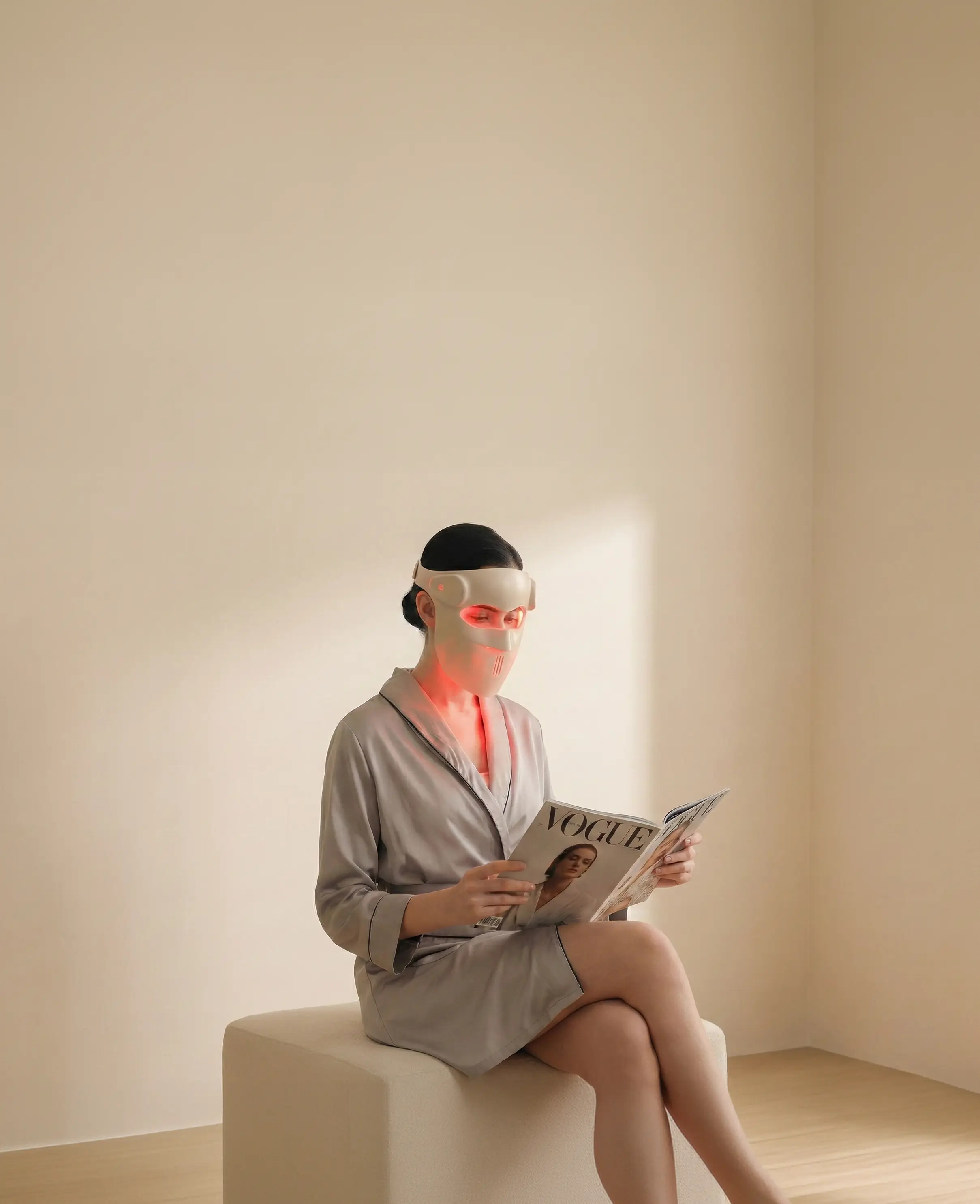
For years, professional LED light routine treatments were reserved for dermatology clinics and high-end spas. Today, advances in skincare technology have made LED light therapy accessible at home, and one of the most talked-about innovations is the multi-colour LED face mask.
But beyond the futuristic glow and social media trend, what does LED light technology actually do? And why do some masks offer eight different colours instead of just one or two?
The answer lies in wavelengths.
How LED light treatment works
LED stands for Light Emitting Diode. Unlike UV light, which can damage the skin, "LED light technology uses specific, controlled wavelengths that interact with the skin at different levels. Each wavelength interacts differently with skin cells, which is why different colors are associated with different cosmetic benefits.
The treatment is non-invasive and painless. There is no downtime, no heat damage, and no disruption to the skin barrier. Instead, the light energy is absorbed by the skin and supports its natural processes over time.
What makes multi-colour masks particularly appealing is their versatility. Skin is dynamic; it changes with hormones, stress, environment, and age. A single light setting may not address every concern, which is why advanced masks include multiple options.
Red Light: Supporting Firmness and Radiance
Red light is one of the most widely studied wavelengths in LED light treatmen. It penetrates deeper into the skin and is commonly associated with supporting the appearance of firmness and improving the appearance of fine lines.
With consistent use, red light technology is often chosen by those looking to enhance firmness, support a smoother-looking complexion, and restore a natural glow. It is frequently chosen by those focused on skin firmness within LED therapy, although its role is best understood as supportive rather than corrective.
Blue Light: For Breakout-Prone Skin
Blue light operates closer to the skin’s surface and is commonly associated with blemish-prone complexions. It is often used to help commonly chosen by those managing blemish-prone skin and support oil regulation.
Because it focuses on surface-level concerns, blue light is popular among those managing occasional breakouts or congestion. Many users alternate between red and blue light depending on whether their focus is clarity or rejuvenation.
Green Light: Promoting a More Even Appearance
Green light is often linked to improving the appearance of uneven skin tone and discoloration. While it does not erase pigmentation, it is commonly used to support a brighter and more balanced-looking complexion over time.
Those concerned with dullness or dark spots frequently incorporate green light sessions into their routine as part of a long-term approach to tone refinement.
Yellow Light: Calming and Soothing
Yellow light is typically associated with calming the appearance of redness and supporting sensitive skin. It is often described as a gentle setting, making it appealing for those whose skin reacts easily to environmental stressors or active ingredients.
In a multi-colour system, yellow light offers a restorative option on days when the skin feels irritated or overwhelmed.
Purple, Cyan, White, and Orange: Advanced Customisation
Purple light is commonly understood as a combination of red and blue wavelengths, designed to balance concerns related to both aging and breakouts. It appeals to those managing multiple skin goals at once.
Cyan, or light blue, is often associated with soothing stressed skin and supporting overall skin comfort. It is frequently chosen after intensive treatments or during periods of environmental stress.
White light is typically marketed as a deeper-penetrating option, aimed at supporting a refreshed appearance and firmness across multiple layers of the skin.
Orange light is linked to revitalising dull complexions and promoting a healthy-looking glow, making it a popular pre-event setting.
Why Multi-Colour Matters
Skin concerns rarely exist in isolation. Someone experiencing breakouts may also be concerned about post-acne marks. A person focused on anti-aging may also struggle with redness or uneven tone. A single light setting cannot adapt to all of these variables.
A multi-colour LED mask allows users to tailor treatments according to their skin’s changing needs. One day may call for calming and soothing; another may focus on clarity or radiance.
Consistency is key. LED therapy is not an overnight solution but a cumulative one. With regular use, many people notice gradual improvements in texture, clarity, and overall skin vitality.
The Future of Skincare Technology
LED light technology reflects a broader movement in skincare: non-invasive treatments that work with the skin rather than aggressively against it. Instead of relying solely on topical products, consumers are increasingly interested in tools that support the skin’s natural processes.
Multi-colour LED masks offer that flexibility. They bridge professional technology and home convenience, giving users more control over their routines.
In the end, the power of LED therapy lies not in the glow of the mask itself, but in its ability to adapt. Because modern skincare is no longer about one solution for everyone, it is about personalisation.
And sometimes, the right wavelength makes all the difference.
For years, professional LED light routine treatments were reserved for dermatology clinics and high-end spas. Today, advances in skincare technology have made LED light therapy accessible at home, and one of the most talked-about innovations is the multi-colour LED face mask.
But beyond the futuristic glow and social media trend, what does LED light technology actually do? And why do some masks offer eight different colours instead of just one or two?
The answer lies in wavelengths.
How LED light treatment works
LED stands for Light Emitting Diode. Unlike UV light, which can damage the skin, "LED light technology uses specific, controlled wavelengths that interact with the skin at different levels. Each wavelength interacts differently with skin cells, which is why different colors are associated with different cosmetic benefits.
The treatment is non-invasive and painless. There is no downtime, no heat damage, and no disruption to the skin barrier. Instead, the light energy is absorbed by the skin and supports its natural processes over time.
What makes multi-colour masks particularly appealing is their versatility. Skin is dynamic; it changes with hormones, stress, environment, and age. A single light setting may not address every concern, which is why advanced masks include multiple options.
Red Light: Supporting Firmness and Radiance
Red light is one of the most widely studied wavelengths in LED light treatmen. It penetrates deeper into the skin and is commonly associated with supporting the appearance of firmness and improving the appearance of fine lines.
With consistent use, red light technology is often chosen by those looking to enhance firmness, support a smoother-looking complexion, and restore a natural glow. It is frequently chosen by those focused on skin firmness within LED therapy, although its role is best understood as supportive rather than corrective.
Blue Light: For Breakout-Prone Skin
Blue light operates closer to the skin’s surface and is commonly associated with blemish-prone complexions. It is often used to help commonly chosen by those managing blemish-prone skin and support oil regulation.
Because it focuses on surface-level concerns, blue light is popular among those managing occasional breakouts or congestion. Many users alternate between red and blue light depending on whether their focus is clarity or rejuvenation.
Green Light: Promoting a More Even Appearance
Green light is often linked to improving the appearance of uneven skin tone and discoloration. While it does not erase pigmentation, it is commonly used to support a brighter and more balanced-looking complexion over time.
Those concerned with dullness or dark spots frequently incorporate green light sessions into their routine as part of a long-term approach to tone refinement.
Yellow Light: Calming and Soothing
Yellow light is typically associated with calming the appearance of redness and supporting sensitive skin. It is often described as a gentle setting, making it appealing for those whose skin reacts easily to environmental stressors or active ingredients.
In a multi-colour system, yellow light offers a restorative option on days when the skin feels irritated or overwhelmed.
Purple, Cyan, White, and Orange: Advanced Customisation
Purple light is commonly understood as a combination of red and blue wavelengths, designed to balance concerns related to both aging and breakouts. It appeals to those managing multiple skin goals at once.
Cyan, or light blue, is often associated with soothing stressed skin and supporting overall skin comfort. It is frequently chosen after intensive treatments or during periods of environmental stress.
White light is typically marketed as a deeper-penetrating option, aimed at supporting a refreshed appearance and firmness across multiple layers of the skin.
Orange light is linked to revitalising dull complexions and promoting a healthy-looking glow, making it a popular pre-event setting.
Why Multi-Colour Matters
Skin concerns rarely exist in isolation. Someone experiencing breakouts may also be concerned about post-acne marks. A person focused on anti-aging may also struggle with redness or uneven tone. A single light setting cannot adapt to all of these variables.
A multi-colour LED mask allows users to tailor treatments according to their skin’s changing needs. One day may call for calming and soothing; another may focus on clarity or radiance.
Consistency is key. LED therapy is not an overnight solution but a cumulative one. With regular use, many people notice gradual improvements in texture, clarity, and overall skin vitality.
The Future of Skincare Technology
LED light technology reflects a broader movement in skincare: non-invasive treatments that work with the skin rather than aggressively against it. Instead of relying solely on topical products, consumers are increasingly interested in tools that support the skin’s natural processes.
Multi-colour LED masks offer that flexibility. They bridge professional technology and home convenience, giving users more control over their routines.
In the end, the power of LED therapy lies not in the glow of the mask itself, but in its ability to adapt. Because modern skincare is no longer about one solution for everyone, it is about personalisation.
And sometimes, the right wavelength makes all the difference.